Grow Smarter, Not Harder: Why Crop Planning Is Essential for Flower Farmers
Jan 27, 2026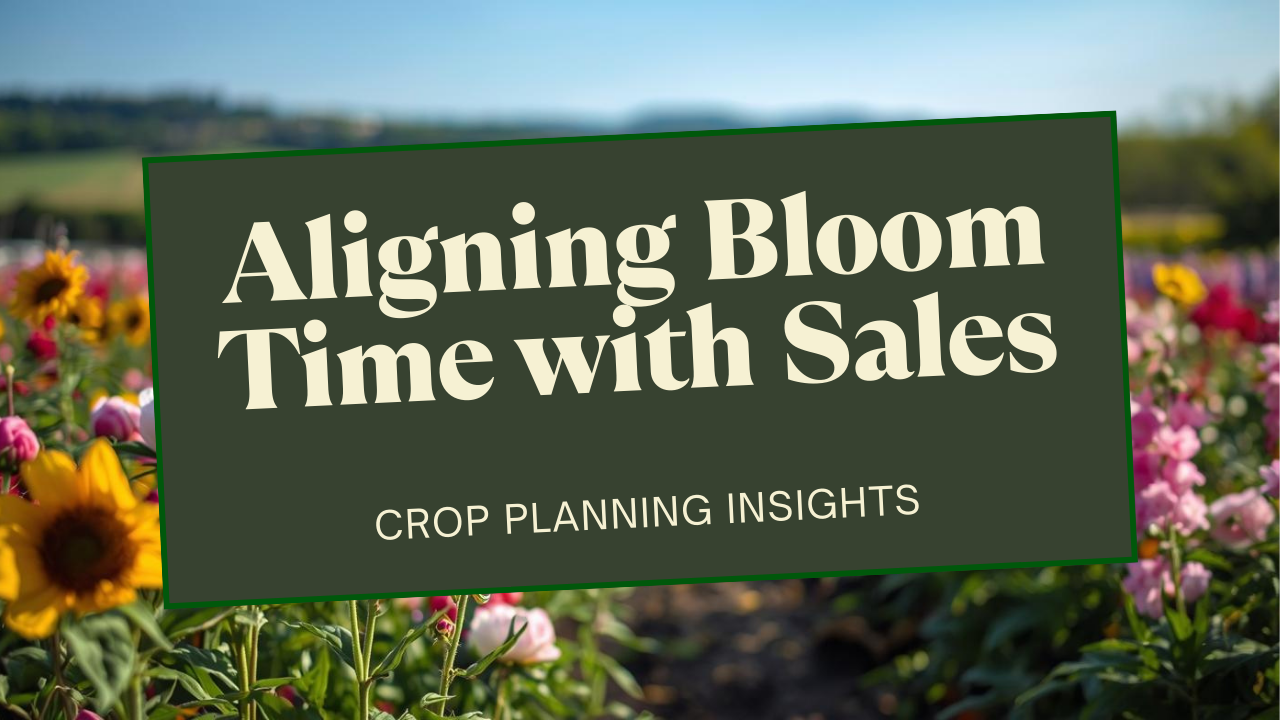
When people hear “crop planning,” they often think it’s about controlling every outcome on the farm. But it’s not. Crop planning is about aligning what you grow with when and how you plan to sell it. It’s a decision-making process that respects your time, your labor, and your flowers.
At Sunny Mary Meadow, crop planning starts with one simple question: when will this crop bloom, and how will I sell it when it does? From there, every other decision—event bookings, cooler space, staffing, seed ordering—becomes more intentional.
Your Farm Is Unique, So Your Plan Should Be Too
Just like there are many types of food businesses, there are many types of flower farms. Saying you grow flowers is like saying you're in the food industry. Are you fast casual or fine dining? The way you sell flowers should guide what you grow and when. If you’re selling U-pick stems or farmers market bouquets, your planning needs are different than if you’re booking weddings with specific color palettes or supplying florists on tight timelines.
Simple Systems Work—Until They Don’t
For newer growers or those with casual business models, you can keep things simple. Go by your frost dates, direct sow your sunflowers and zinnias, and sell what blooms when it blooms. That approach works—until you start booking weddings in May or building subscriptions that need consistency week after week.
When you move beyond heat-loving annuals into crops like lisianthus, tulips, snapdragons, and peonies, timing matters a lot more. These flowers are slower to mature, more expensive to grow, and they don’t give you second chances. You need to know when they will bloom and have a plan for how to use or sell them when they do.
What Crop Planning Looks Like in Practice
Take my peonies, for example. I have about 1,000 plants going into their third year. From experience, I know they start blooming around May 26 to June 1, depending on the variety. Because I track that, I don’t plan on using them for weddings booked over Memorial Day weekend, but I know I can count on them for events in the first few weeks of June.
Crop planning isn’t only about bloom times, though. It’s about labor, cooler space, and cash flow. It impacts when and how much to plant, which sales channels to prioritize, and even which varieties to grow more of. On my farm, roughly 50% of what we grow goes into our own weddings and events, about 20% is sold to florists, and the remaining 30% goes into market bouquets and subscriptions. That split only works because we plan ahead.
Tools Help, But They’re Not Required
You can crop plan with pen and paper, a spreadsheet, or a whiteboard. I’ve used them all. But as we built out our venue business and began growing more flowers to order, we needed a better way to manage our planting schedules. That’s why we created Farmers to Florist, a crop planning tool that helps reduce repetitive tasks and makes it easier to stay organized.
The platform allows us to enter a crop, assign a planting date, and instantly see a projected bloom window based on days to maturity. We can adjust planting dates, quantities, and see how that affects our inventory across all our sales channels. This doesn’t replace experience, but it does streamline the work and reduce mistakes.
Make Decisions While You Still Have Options
Good crop planning means fewer surprises and better results. It allows you to respond to bookings and orders with confidence, knowing what will be blooming and when. When I booked a $5,000 August wedding last week, I immediately worked backward to figure out when I needed to plant lisianthus, green amaranth, and other key flowers. That way, I know I’ll have what I need, when I need it.
Crop planning doesn’t need to be fancy, but it does need to be thoughtful. Make the decisions early while you still have options. Whether you use a tool like Farmers to Florist or keep it simple with a notebook, the most important thing is to start.
Stay connected with news and updates!
Join our mailing list to receive the latest news and updates from our team.
Don't worry, your information will not be shared.
We hate SPAM. We will never sell your information, for any reason.

